When strict regulations require low salinity discharge or minimal wastewater volume, companies must implement Zero Liquid Discharge (ZLD) systems to ensure compliance. Suntar’s advanced membrane technologies and multi-step treatment solutions maximise water recovery while minimising waste, delivering the highest efficiency and the lowest disposable waste volume in a ZLD process.
What is Zero Liquid Discharge (ZLD)?
Zero Liquid Discharge (ZLD) is a water treatment approach that recovers all water while removing contaminants as solid waste.
Pretreatment
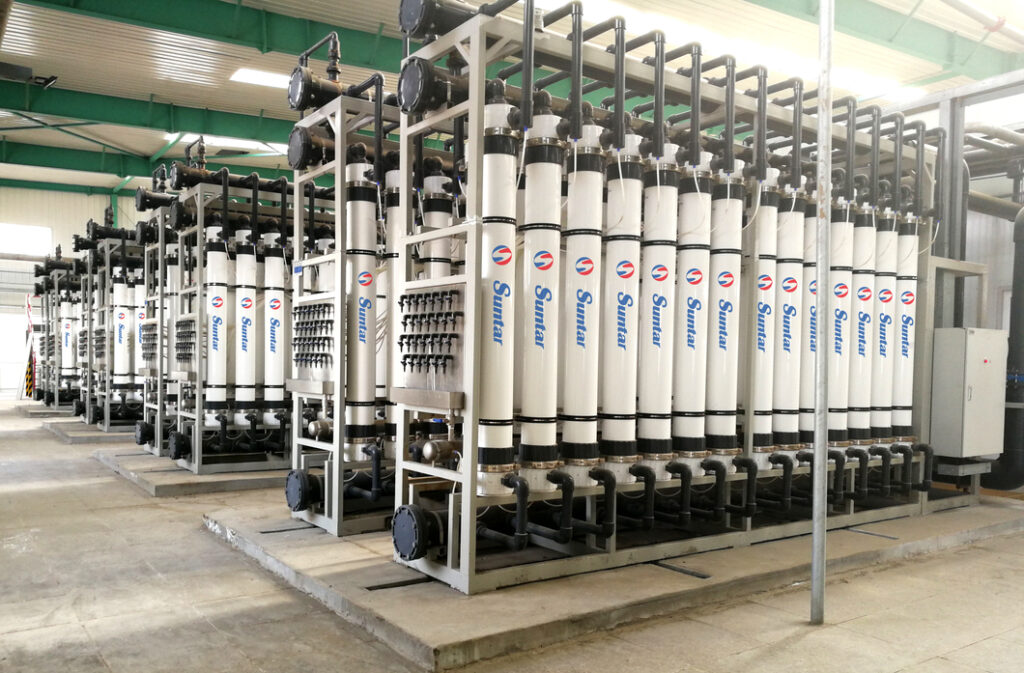
Prepares wastewater for treatment and concentrates brine according to the specifications of downstream equipment. Pretreatment is essential for reducing Total Suspended Solids (TSS), Chemical Oxygen Demand (COD), and turbidity in wastewater. By effectively lowering these contaminants, pretreatment enhances the efficiency of subsequent wastewater treatment processes, ensuring smoother operation and improved overall treatment performance.
Membrane Treatment
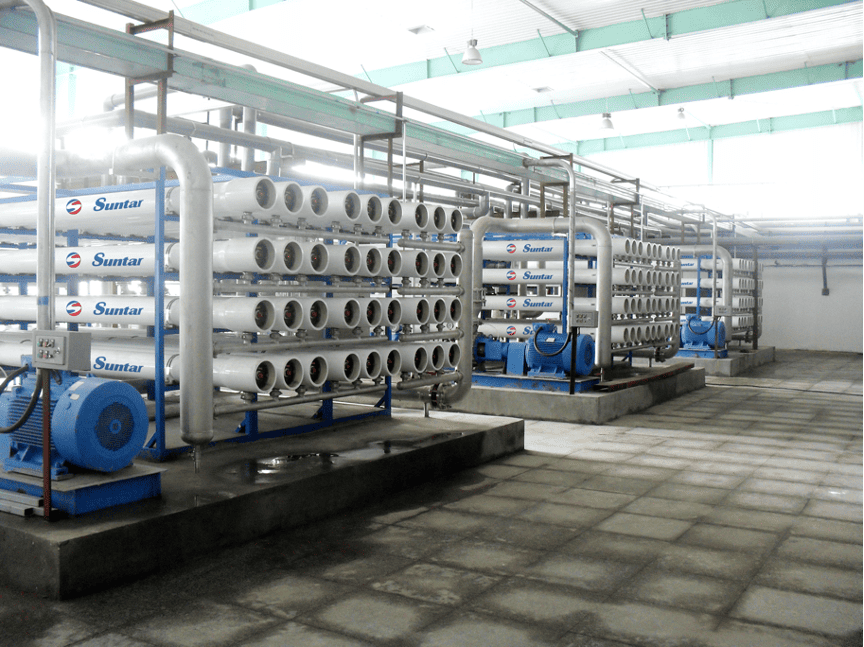
In a Zero Liquid Discharge (ZLD) system, the concentration of dissolved solids is typically achieved using membrane technologies such as Reverse osmosis (RO), Electrodialysis (ED), or a combination of both. By integrating an RO process, water recovery rates can achieve up to 95% or higher, maximizing efficiency and minimizing waste.
Evaporator
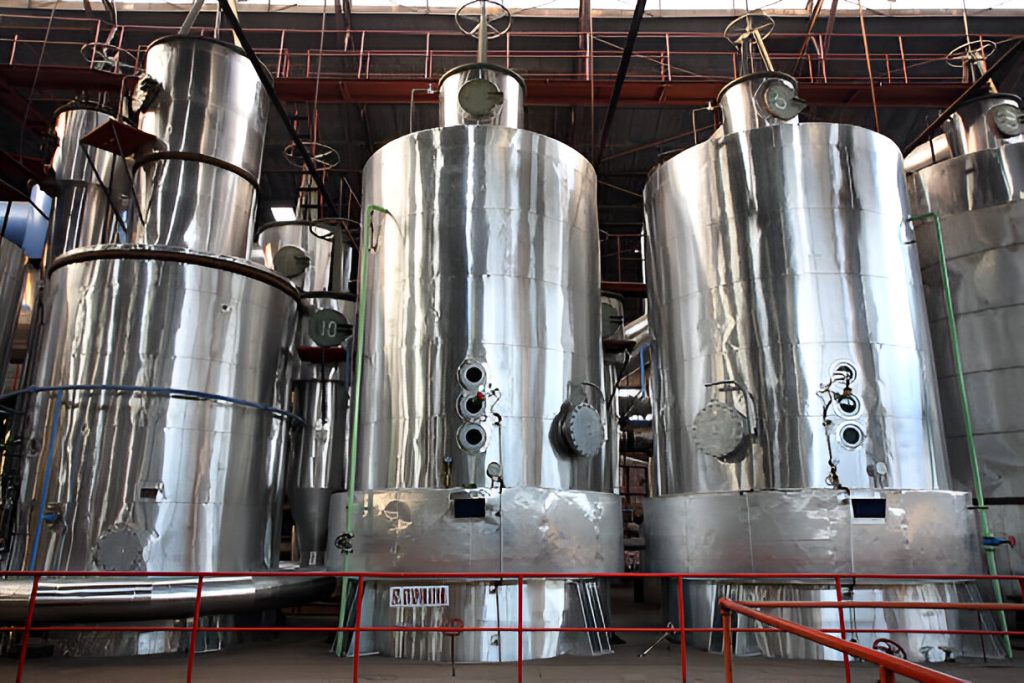
Brine concentration and volume reduction. After membrane treatment, wastewater undergoes evaporation to remove water from the waste stream and concentrate the remaining contaminants. This process is typically carried out using a multi-effect evaporator or a thermal evaporator, ensuring efficient water separation and minimizing waste disposal.
Crystallizer
Produces solids for disposal or reuse. The concentrated waste stream must undergo crystallization to remove additional water, resulting in a solid waste product that can be further processed or disposed of safely.
Key Benefits
- Water Recovery: The process aims to recover as much water as possible for reuse within the facility.
- Solid Waste Management: The remaining impurities are concentrated and converted into solid waste, which is often disposed of in landfills or used in other industrial applications.
- Environmental Protection: By eliminating wastewater discharge, ZLD prevents pollution of natural water bodies.
Industrial Applications
Process Flowchart
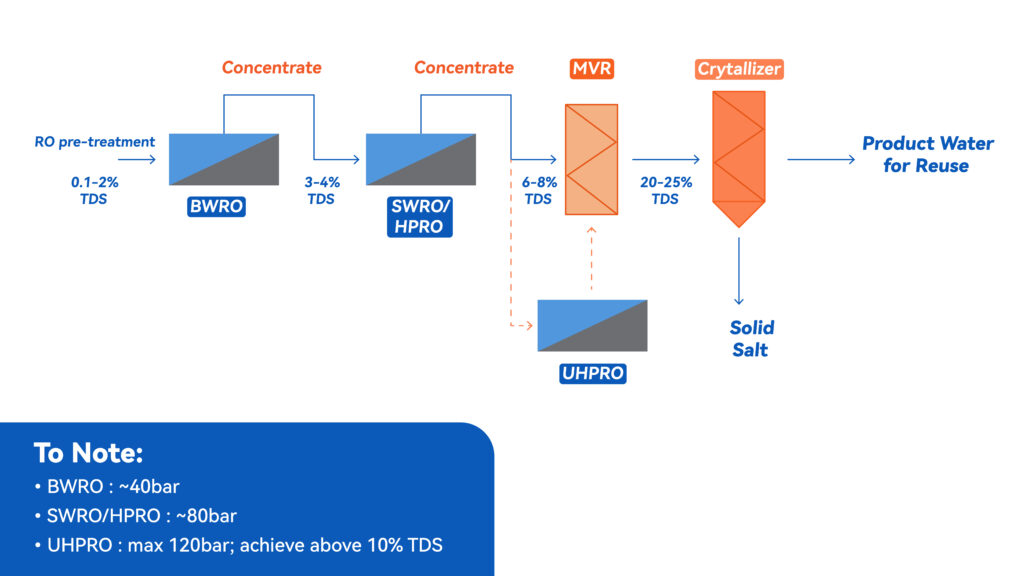
Relevant Technologies
Suntar’s membrane technologies are applied in both pretreatment (such as our pressurised ultrafiltration) and membrane treatment processes. Our Spiral Wound RO Membrane, designed to operate at ultrahigh pressures of up to 120 bar, significantly reduces the volume of water entering brine concentrators, evaporation ponds, and crystallizers, resulting in lower operating costs and improved energy efficiency.
Additionally, our Spiral Wound NF Membrane, tailored for demanding industrial applications, delivers exceptional salt separation performance for NaCl and Na₂SO₄, ensuring optimal process efficiency and reliability.
Frequently Asked Questions
How much water does a zero liquid discharge system recover?
Reverse osmosis alone can recover 95% or more, and the evaporator and crystallizer remove the rest, leaving only solid waste.
What happens to the leftover solid waste?
It can be disposed of safely, often in a landfill, or reused in other industrial applications.
What is the difference between zero liquid discharge and water reclamation?
Zero liquid discharge recovers all the water and leaves only solids, so no wastewater is released. Water reclamation cleans wastewater so it can be used again, for example in cooling towers.
Water Reclamation
Water reclamation cleans wastewater so it can be used again. Our systems combine pretreatment, ultrafiltration or a membrane bioreactor, and reverse osmosis. This allows water reuse in cooling towers, cleaning systems and data centre cooling.